
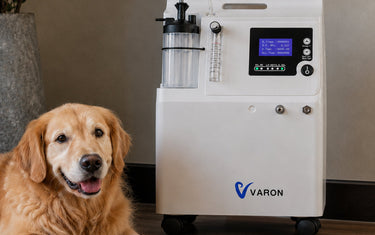
When a veterinarian recommends home oxygen therapy for a dog or cat, navigating technical equipment specs like output, purity, and sound levels can feel overwhelming. Understanding key pet oxygen concentrator specifications allows you to select a reliable system that provides therapeutic support while keeping your home environment peaceful.
Managing the pet oxygen concentrator flow rate is essential, as delivering the correct airflow volume determines whether your pet receives adequate oxygenation. This guide breaks down flow rates, oxygen purity, noise levels, delivery methods, and buyer frameworks so you can choose an oxygen concentrator for pets with complete confidence.
What Is a Pet Oxygen Concentrator?

A pet oxygen concentrator is an electrically powered device that draws in ambient room air (which naturally consists of roughly 21% oxygen, 78% nitrogen, and trace gases), filters out the nitrogen using molecular sieve beds, and delivers purified medical oxygen directly to your animal.
Unlike compressed gas cylinders, a pet oxygen concentrator generates a continuous, practically limitless supply of oxygen as long as it has access to a power source. This makes an oxygen concentrator at home for pets safer, more reliable, and significantly more practical for ongoing respiratory management.
Concentrators vs. Oxygen Tanks: Which Is Best for Home Use?
When evaluating options for oxygen therapy for your dog or cat, buyers generally choose between stationary/portable concentrators and traditional compressed oxygen tanks.
Safety, Refill Convenience, and Long-Term Cost Breakdown
-
Safety: Compressed oxygen tanks store gas under high pressure, presenting fire hazards and tipped-cylinder risks. Electrical concentrators generate low-pressure oxygen on demand, drastically reducing household safety hazards.
-
Refill Convenience: Oxygen tanks run out of gas and require frequent delivery trips or local refills. A home oxygen concentrator for pets extracts gas from surrounding air, eliminating supply anxiety during long weekends or overnight sessions.
-
Long-Term Cost: While oxygen cylinders may have a lower initial rental fee, recurring gas delivery and tank rental costs rack up quickly over a few months. Purchasing a dedicated pet oxygen concentrator involves a single upfront investment with minimal ongoing operational costs (limited primarily to replacing air filters).
Key Specs Explained: Flow Rate, Concentration, and Noise

To select the right machine, pet parents and first-time buyers must evaluate three primary parameters: pet oxygen concentrator flow rate, purity percentages, and noise levels.
Pet Oxygen Concentrator Flow Rate: Matching Volume to Pet Size
Flow rate represents the volumetric speed of gas leaving the device, measured in liters per minute (L/min). The ideal pet oxygen concentrator flow rate depends on your pet’s weight, respiratory frequency, and delivery setup.
-
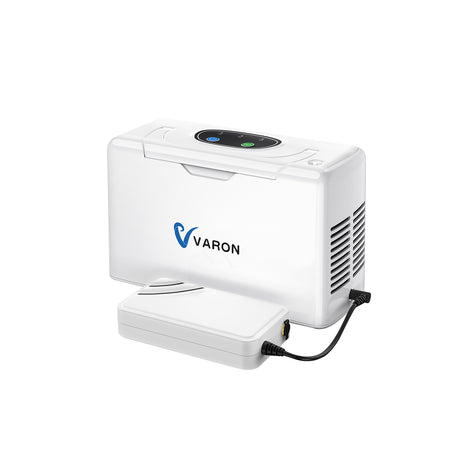
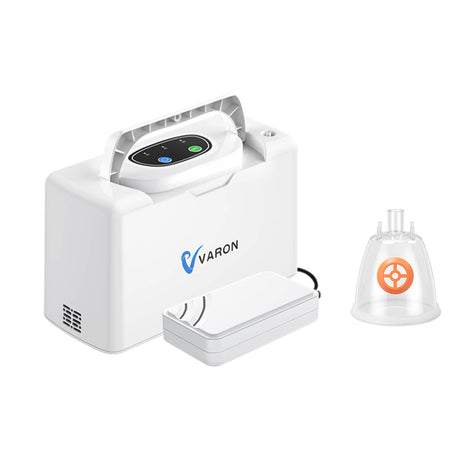
Low to Moderate Output (0.5 to 3 L/min): Suited for cats, small-breed dogs, or direct snout-mask therapy. The VARON VL-2 portable oxygen concentrator delivers a continuous 3 L/min flow rate, ideal for short-term support and vet visits.
-
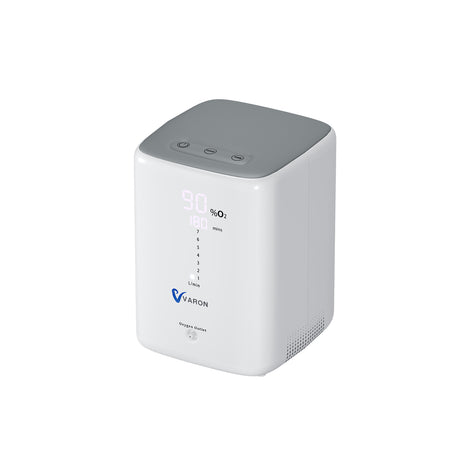
Broad Adjustable Ranges (1 to 7 L/min): Provides flexibility as care requirements change. The VARON VH-3 home pet oxygen concentrator features 7 selectable settings (1–7 L/min), helping caregivers adapt airflow to resting versus active recovery phases.
-
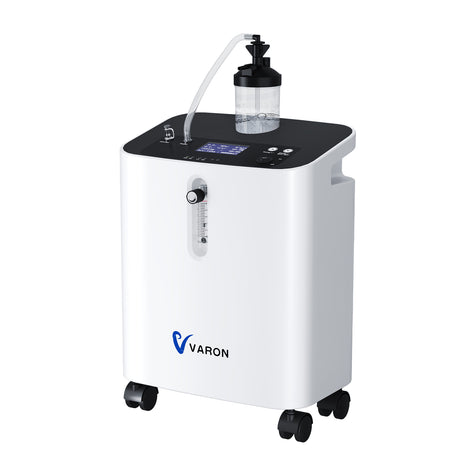
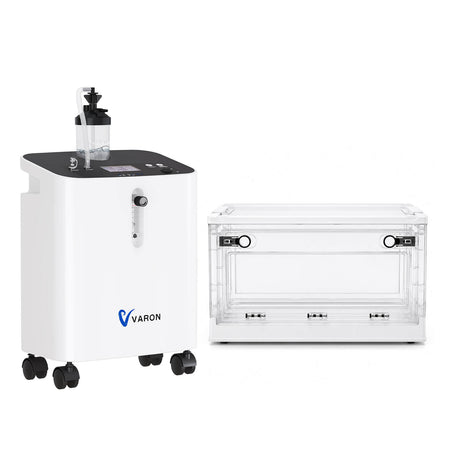
High Volumetric Output (5 to 10 L/min): Large dog breeds or enclosed oxygen cages require higher continuous volume to flush out accumulated carbon dioxide and heat. The VARON Serene 3 pet oxygen concentrator provides an impressive 1–10 L/min flow range to easily satisfy large chamber demands.
Oxygen Concentration Levels: Purity vs. Airflow Dynamics
Oxygen concentration refers to the purity percentage of oxygen produced by the machine. Standard atmospheric air is 21% pure; concentrators push output purity up to 90%+.
|
Unit Model |
Category |
Flow Rate Range |
Oxygen Concentration |
Ideal Application |
|
High-Purity Home Unit |
0.5–5 L/min |
93% ± 3% (constant across full range) |
Chronic respiratory illnesses requiring steady high purity |
|
|
High-Volume Home Unit |
1–10 L/min |
93% ± 3% (1–3 L/min) Up to 80% (4–10 L/min) |
Large dog breeds or large oxygen cages |
|
|
Compact Dual-Care Home Unit |
1–7 L/min |
28%–90% (adjustable by flow setting) |
Mild to moderate support & integrated nebulizer use |
|
|
Portable Travel Unit |
3 L/min |
30% ± 2.5% |
Short road trips, outdoor transport, vet visits |
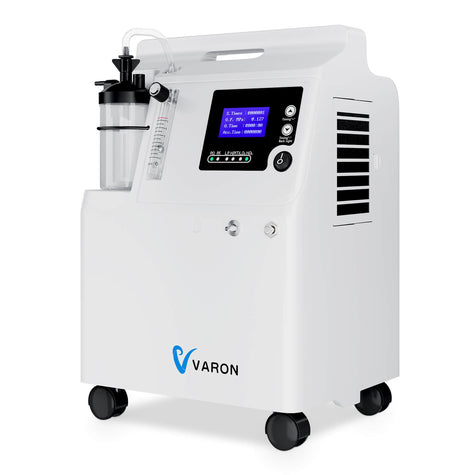
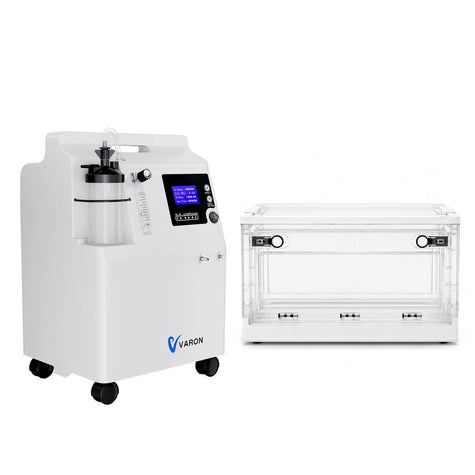
A key technical rule: on many multi-flow devices, as the pet oxygen concentrator flow rate increases, concentration drops slightly. For instance, the VARON Serene 3 delivers 93% ± 3% purity at 1–3 L/min, shifting toward ~80% at 10 L/min. For pets needing high-purity output regardless of volume, the VARON Serene 5 maintains 93% ± 3% output across its entire 0.5–5 L/min spectrum.
Sound Levels and Pet Comfort: Managing Compressor Noise (dB)

Compressor motors generate sound and vibration. Because cats and dogs possess acute hearing, loud gear can cause anxiety, accelerating their breathing rate and defeating the purpose of oxygen therapy.
-
Under 45 dB (Ultra-Quiet): Equivalent to a soft library. The VARON VH-3 runs at ≤42 dB, while the VARON Serene 5 operates at ≤43 dB—making them exceptional for overnight sessions beside sleeping pets.
-
45 to 50 dB (Standard Home Level): Similar to a modern refrigerator hum. The VARON Serene 3 maintains ≤48 dB, delivering high flow while keeping domestic environments calm.
-
Above 50 dB (Travel & Mobile Level): Portable compressors pack high power into smaller chassis. The VARON VL-2 operates under 52 dB, balancing light frame weight (3.3 lbs) with travel convenience.
How Masks and Chambers Affect Spec Requirements
How oxygen is administered directly dictates machine specification requirements.

VH-3 Home Pet Oxygen Concentrator
|
Feature / Requirement |
Direct Snout Mask |
Enclosed Oxygen Chamber |
|
Delivery Mechanism |
Direct delivery to the nose and mouth |
Ambient enrichment of cage or tent space |
|
Required Flow Rate |
Low flow (1–3 L/min) |
High flow (5–10 L/min) |
|
Airflow Efficiency |
High efficiency with minimal gas waste |
Requires higher volume to prevent $CO_2$ buildup |
|
Pet Comfort & Setup |
Requires pet mask acceptance |
Hands-free, low-stress care for anxious pets |
Direct Snout Masks for Quick and Targeted Relief
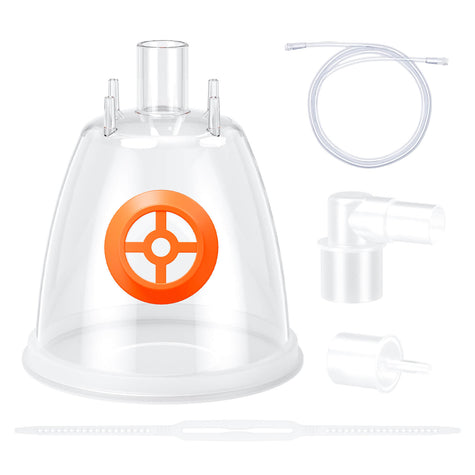
Silicone pet masks fit over the nose and snout, delivering enriched gas straight into the airways. Masks minimize waste, allowing lower pet oxygen concentrator flow rate settings (1–3 L/min) to achieve therapeutic oxygenation. They are ideal for quick treatments or cooperative animals.
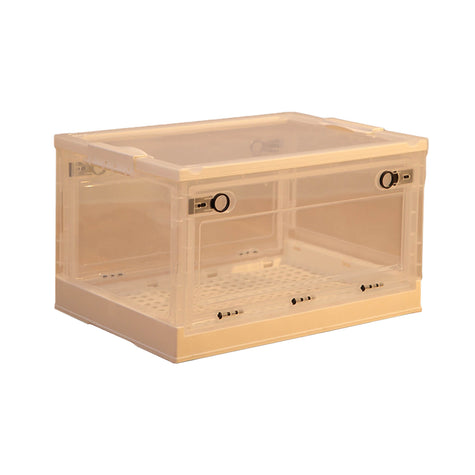
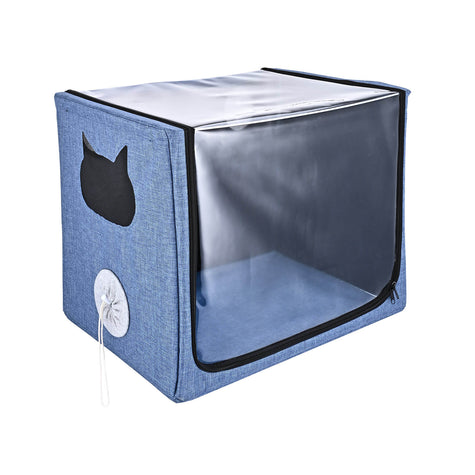
Enclosed Oxygen Chambers and Tents for Stress-Free Care
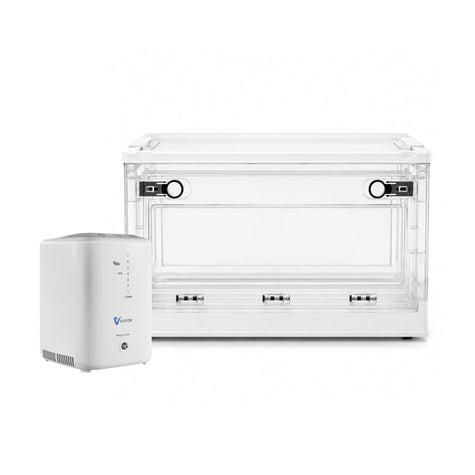
For anxious pets or cats that refuse masks, an oxygen tent or acrylic chamber provides a hands-free environment. However, chambers require significantly higher flow settings (typically 5–10 L/min) to continuously purge carbon dioxide and maintain elevated oxygen saturation inside the box. High-output units like the VARON Serene 3 are built specifically for chamber compatibility.
Home vs. Portable Oxygen Concentrators: Key Differences

Understanding unit design ensures buyers don't select an underpowered machine for daily home care or an oversized unit for vet trips.
-
Stationary Home Units (e.g., VARON Serene 5, Serene 3, VH-3): Plug into AC wall outlets, offer continuous 24/7 operation, provide higher flow capacities (up to 10 L/min), and feature ultra-quiet internal dampening.
-
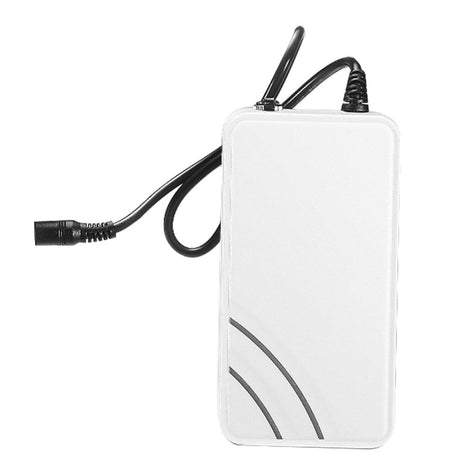
Portable Units (e.g., VARON VL-2 Portable Oxygen Concentrator): Lightweight (3.3 lbs), battery-powered portable oxygen for pets designed for mobile transport. The VARON VL-2 includes a 2500 mAh battery lasting up to 2.5 hours (or up to 5 hours with an optional 5000 mAh battery), along with a car adapter for stress-free vehicle travel.
How to Choose the Right Oxygen Concentrator for Your Pet
First-time buyers can follow this step-by-step checklist to select the optimal device:
-
Obtain Vet Prescription Specs: Get precise veterinary instructions on required flow rate (L/min) and treatment session duration.
-
Confirm Delivery Setup: Determine if your dog or cat will use a direct snout mask or rest inside an oxygen chamber.
-
Determine Operating Environment: Decide if the machine is intended primarily for home rest, travel, or dual use.
-
Compare Concentration at Target Flow: Verify the unit maintains required purity levels at your pet's specific prescribed flow rate (e.g., checking if output stays at 93% when set to 3 L/min).
-
Review Sound & Portability Specs: Ensure sound output stays under 45–50 dB for home units, and check weight/battery specs for mobile units.
-
Confirm Accessory Integration: Check for dual functionality like built-in nebulizer ports or humidifiers.
Essential Accessories: Nebulizers, Humidifiers, and Tubing

Beyond the base unit, specialized accessories enhance daily care:
-
Integrated Nebulizers: Respiratory illnesses often require inhalation medications. Devices like the VARON VH-3 feature built-in nebulization (atomization rate ≥0.2 ml/min), combining aerosolized medication delivery and oxygen therapy into one system.
-
Humidifier Bottles: Dry oxygen can desiccate delicate airway linings during long sessions. Units like the VARON Serene 3 include humidifier attachments to add soothing moisture to airflow.
-
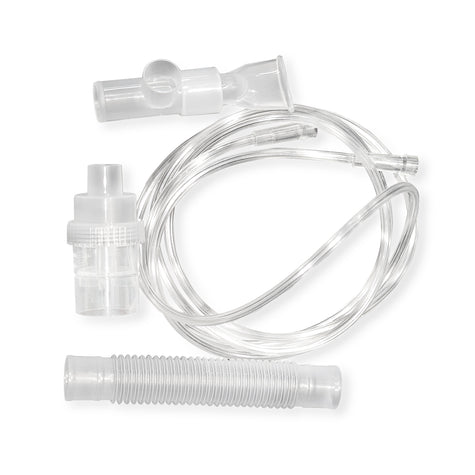
Kink-Resistant Tubing & Pet Masks: Ensure long, flexible tubing connects easily to custom pet-shaped silicone masks.
Questions to Ask Your Veterinarian Before Buying
Before purchasing an oxygen concentrator for pets, review these practical questions with your veterinary clinician:
-
What precise pet oxygen concentrator flow rate (L/min) should I use for my pet's weight and condition?
-
What minimum oxygen concentration percentage does my pet require?
-
Is a direct mask or an enclosed oxygen chamber better suited for my pet's stress levels?
-
How many minutes/hours should each oxygen session last, and how many times per day?
-
Should I add humidification during treatments?
-
Which clinical signs indicate I should stop home oxygen and seek emergency veterinary care?
Frequently Asked Questions (FAQs)
1. Can dogs and cats use the same concentrator?
Yes. A pet oxygen concentrator provides pure oxygen regardless of species. You simply adjust the flow rate settings and mask/chamber sizes to match your dog or cat's physical scale.
2. Is a higher flow rate always better?
No. Flow rates must match your pet's size and delivery setup. Excessive flow through a mask can cause dryness or discomfort, while insufficient flow in a chamber can lead to carbon dioxide buildup. Always follow your vet's prescribed rate.
3. Can a human oxygen concentrator be used for a pet?
Yes, many basic mechanisms are identical. However, dedicated pet concentrators include pet-sized masks, integrated nebulizers, and lower flow settings tailored for smaller animals.
4. Can a pet oxygen concentrator run overnight?
Stationary models (like the VARON Serene 5, Serene 3, and VH-3) are built for continuous-flow operation, but this does not mean every pet should use them continuously or unattended. Never leave your pet unsupervised during oxygen sessions. Always follow your veterinarian's recommended flow setting and session length while keeping tubing secure and vents clear.
5. How long does a portable battery last?
Runtime depends on the battery size. For example, the VARON VL-2 runs for up to 2.5 hours on its standard 2500 mAh battery or up to 5 hours with an optional 5000 mAh pack.
6. Can oxygen therapy and nebulization be used at the same time?
It depends on the device. Multi-function units like the VARON VH-3 feature dedicated ports to support both therapies. Always check device manual instructions before running dual treatments.
7. What should I do if my pet becomes distressed during a session?
If your pet pants heavily, struggles against a mask, or exhibits blue/pale gums, immediately pause the session, allow them to rest in room air, and contact your emergency veterinarian.
Conclusion

Serene 5 Pet Oxygen Concentrator
Choosing the right oxygen concentrator for pets comes down to balancing technical specifications with your animal's unique needs. Matching the prescribed pet oxygen concentrator flow rate, selecting reliable purity output, and prioritizing quiet decibel performance ensures a peaceful healing environment.
Whether using a stationary powerhouse like the VARON Serene 5 for continuous high-purity output, a high-volume Serene 3 for chamber setups, a compact VH-3 for quiet dual-nebulizer care, or a VL-2 for portable travel support, grounding your choice in solid specification knowledge empowers you to deliver safe, effective respiratory care right from the comfort of home. Get your pet oxygen concentrator today and use code 41A7WES1JE3A at checkout for exclusive savings on your setup.